Guide6 min
Types of Water Tanks in Malaysia — Which is Best?
Complete comparison of poly, stainless steel, concrete & panel tanks — pros, cons & prices.
Types of Water Tanks in Malaysia: Which One Is Best?
There are 5 common types of water tank in Malaysia. Each has its own advantages, drawbacks and cleaning method. This guide helps you identify the tank at your home and choose a new one if you need a replacement.
Knowing your tank type also tells you what cleaning costs and how the technician approaches it. The type matters more than most homeowners expect.
1. Poly Water Tank (Polyethylene)
The most popular water tank in Malaysia. You will see one on the roof of almost every terrace house. Blue, black or green, in sizes from 200 to 5,000 litres.
Advantages:
- The cheapest to buy and install.
- Light, easy to install on the roof.
- Does not rust.
Drawbacks:
- A translucent tank encourages algae if the lid is not tight.
- The plastic can crack after 10 to 15 years of heat exposure.
Cleaning: the easiest. Soft brush and food-grade agent. From RM150, and usually done in 1 to 2 hours.
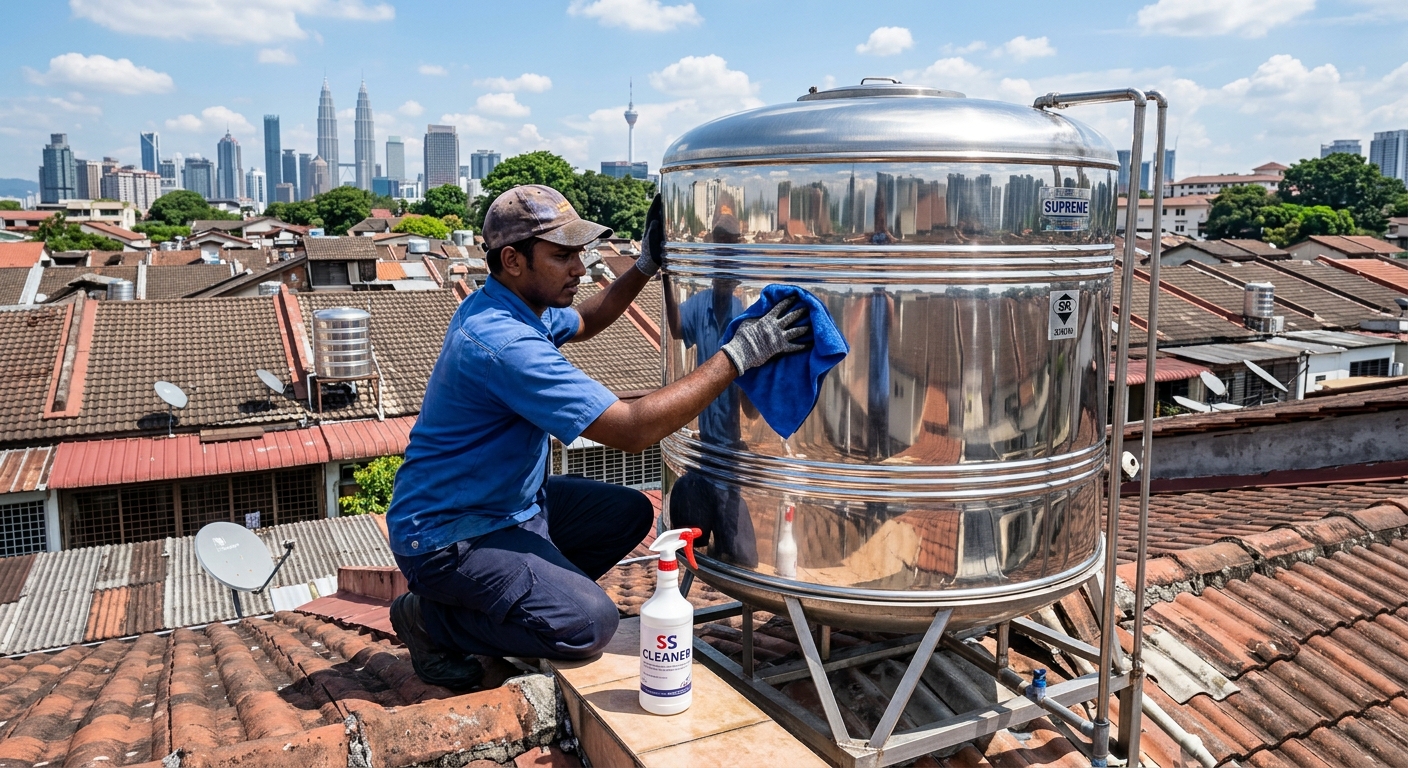
2. Stainless Steel Water Tank
The premium choice, common in bungalows and new houses. Sizes from 500 to 3,000 litres. It also looks neat on a modern house.
Advantages:
- Long-lasting, 20 years and above.
- Does not absorb odours or colour.
- Does not encourage algae because it is opaque.
Drawbacks:
- Costs 2 to 3 times the price of a poly tank.
- Low grades can rust in coastal areas.
Cleaning: needs a special agent that leaves no marks. The inner surface is polished. RM180 to RM400.
Cleaning every 6 months removes rust flakes before they settle.
3. Fibre Water Tank (FRP)
Common in older houses and shop buildings, usually in large sizes. Yellow or cream. Many were installed decades ago and are still in service.
Advantages:
- Strong and weather-resistant.
- Suitable for large sizes.
Drawbacks:
- Fibre strands can come loose if the inner surface is damaged.
- Hard to repair if cracked.
Cleaning: medium brush, avoid agents that are too strong. Price depends on size.
4. Concrete and Underground Water Tanks
Common in older houses, factories and large buildings. Sizes from 5,000 litres upwards.
Advantages:
- Very large capacity.
- Water stays cool.
Drawbacks:
- The rough surface holds algae and bacteria.
- Thick sediment because it is rarely cleaned.
- Cracks can let groundwater in.
Cleaning: the heaviest job, with high-pressure jet, sediment vacuum and full sanitisation. The technician usually enters the tank with safety equipment. RM300 to RM800.
5. Panel Water Tank (Steel or FRP)
For condominiums, hotels, factories and government buildings. Assembled from square panels. Sizes from 10,000 litres upwards.
Advantages:
- Can be built to fit the space.
- Capacity for hundreds of units.
Drawbacks:
- One dirty tank affects the whole building.
- Needs a fixed cleaning schedule set by the management.
- Residents usually notice a dirty panel tank all at once, on the same day.
Cleaning: carried out with the building management, with a sanitisation report for their records. RM500 to RM2,000. See example jobs in Kuala Lumpur.
Quick Water Tank Comparison
| Type | Purchase price | Lifespan | Cleaning cost |
| Poly | Low | 10 - 15 years | From RM150 |
| Stainless steel | High | 20+ years | RM180 - RM400 |
| Fibre | Medium | 15 - 20 years | Depends on size |
| Concrete | High | 30+ years | RM300 - RM800 |
| Panel | Very high | 20+ years | RM500 - RM2,000 |
Purchase prices vary by brand and size, so treat the column as a rough guide. Cleaning costs are TangkiBersih rates.
Which Water Tank Is Best for a House?
For most terrace and semi-D houses, a 1,000 to 1,500 litre poly tank is enough. It is cheap, easy to clean and easy to replace. Check that the roof platform can take the weight of a full tank before you size up.
Choose stainless steel if the budget allows and you want a tank that lasts 20 years. Avoid low-grade stainless steel in coastal areas such as Mersing because of the salty air.
A sizing guide is in water tanks for new homes.
Which Water Tank Colour Is Best?
For poly tanks, colour matters. Light blue or translucent white tanks let light in. Algae grows on the walls within a few weeks.
Choose black or dark blue. It blocks light and slows algae growth. Most new poly tanks already have a dark outer layer and a white inner layer for this reason.
If your tank is light-coloured, a tight lid becomes even more important.
For stainless steel and concrete, colour is not an issue because both are opaque.
When Should You Replace a Water Tank?
- Cracks that cannot be patched.
- Poly walls that have become brittle and snap easily.
- Rust that has gone through the steel wall.
- A fibre tank releasing strands into the water.
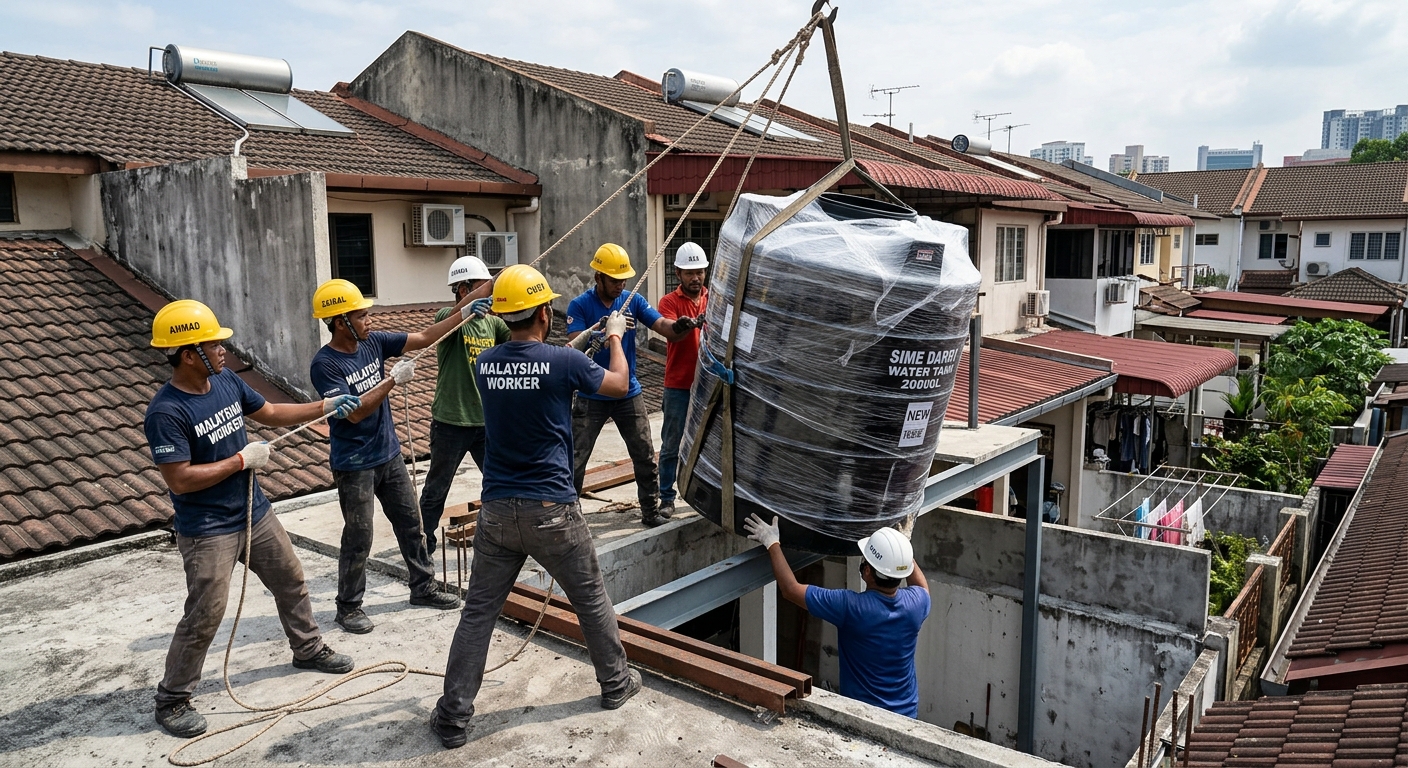
TangkiBersih technicians check the tank condition during every cleaning. If a replacement is needed, we help with new tank installation from RM500. You are told before any work starts.
Small cracks can often be sealed, and the leak repair comes with a 3-month warranty.
Whatever Your Water Tank Type, It Needs Cleaning
Every type of tank collects sediment and bacteria. Clean it at least once a year. TangkiBersih cleans all 5 tank types across Malaysia.
Not sure what type of tank you have? WhatsApp TangkiBersih with a photo. We identify the type and give a quote within 15 minutes. The photo tells us the type, size and access before we arrive.
Frequently Asked Questions
Which water tank type is best for a terrace house?
A 1,000 to 1,500 litre poly tank. It is cheap, light, rust-free and the easiest to clean. Choose a dark colour with a tight lid to reduce algae.
Can a stainless steel water tank rust?
High grades rarely rust. Low grades can rust in coastal areas with salty air. Cleaning every 6 months removes rust flakes before they settle.
How much does it cost to clean a concrete water tank?
RM300 to RM800 depending on size. Concrete tanks need a high-pressure jet and sediment vacuum because the rough surface holds algae and sludge.
Who is responsible for cleaning a condominium panel water tank?
The building management, meaning the JMB or MC. TangkiBersih works with the management to schedule the cleaning and provides a sanitisation report for their records.
Need a Water Tank Cleaning Service?
Contact TangkiBersih now for a free quote. From RM150.
WhatsApp Us NowRelated Articles
Water Tank Cleaning Price 2026 — Complete Guide
How much does water tank cleaning cost in Malaysia? Complete price guide by tank type and size.
Health7 Dangers of Dirty Water Tanks Most People Don't Know
A dirty water tank isn't just an aesthetic problem — it can affect your entire family's health.