Tips4 min
Rainy Season & Water Tanks — Why You Need Extra Care
Rainy season can contaminate your water tank in ways you don't expect. Learn how to protect your family.
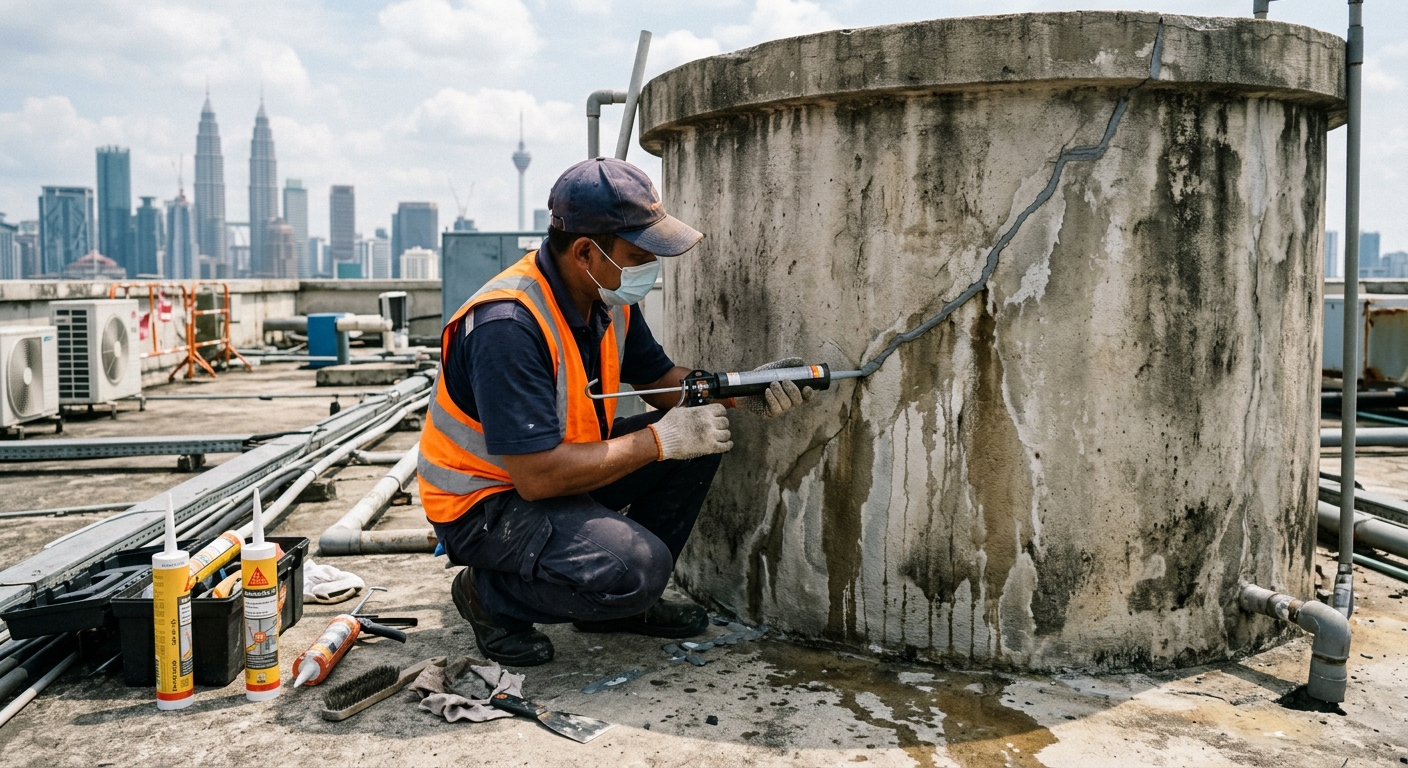
Rainy Season and Water Tanks: Why You Need Extra Care
The rainy season should mean more water. For your water tank, it means more mud, more algae and more problems.
This article explains what happens to your tank during the rainy season. It also gives a simple schedule for before, during and after the monsoon.
What Happens to a Water Tank During the Rainy Season
Cloudy source water. Heavy rain washes soil into rivers and dams, so treatment plants work harder. Water reaching your home is sometimes cloudier than usual.
Fluctuating pressure. Supply disruptions are more frequent during flash floods and pipe damage. Each time supply returns, the first water in carries silt into the tank.
Rainwater entering the tank. A loose lid lets rainwater in directly. Rainwater carries roof dust, leaves and bird droppings.
Faster algae growth. High humidity and standing water are perfect conditions for algae.
None of these problems shows up on day one. They build over the season and appear as cloudy water or a smell weeks later.
Areas Most Affected
The east coast receives the north-east monsoon from November to January. Terengganu, Kelantan and Pahang are hit hardest. Water can stay cloudy for weeks.
Other areas are affected during the mid-year and year-end rains. Highland areas such as Cameron Highlands see cloudy hill water throughout the season.
Sabah and Sarawak also see long wet spells at the year end. Homes there are visited on a grouped schedule, so book ahead.
Before the Rainy Season: Prepare Your Water Tank
Do this in October to early November for the east coast:
- Clean the water tank. Start the season with a clean tank. Old sediment does not mix with new mud.
- Check the tank lid. Make sure it is tight and locked. Replace it if cracked.
- Check the overflow pipe. Make sure it drains to a gutter, not onto the roof.
- Fit a coarse strainer. At the inlet, to hold back silt.
- Clear the roof and gutters. Leaves and rubbish around the tank wash in during heavy rain.
Pre-monsoon cleaning slots fill quickly. Book early. A house tank takes 1 to 2 hours, so one morning is enough.
During the Rainy Season: Watch Your Water Tank
- Open an outdoor tap for 2 to 3 minutes after every supply disruption.
- Check the water in a clear glass every week.
- Do not let the tank level drop too low. Sediment gets sucked into the pipes.
- Watch for smell. A musty smell means algae has started to grow.
A cloudy glass that clears within a few hours is silt from the mains. A glass that stays cloudy for days points to the tank.
If cloudy water continues for more than a week, schedule a cleaning. Do not wait for the season to end.
After the Rainy Season: Clean Your Water Tank
This is when sediment is thickest. Water tank cleaning after the rainy season removes all the mud that has built up.
For the east coast, schedule it for February to March. For other areas, book it after the prolonged heavy rain has stopped.
The full process is in our 6-step water tank cleaning process. Sanitisation follows the scrub, so bacteria left in the sediment are treated too.
Ask the technician to check the lid seal on the same visit. A cracked lid is the usual reason a tank gets dirty again quickly.
Simple Water Tank Schedule
| Timing | Action |
| Before the rainy season | Clean tank, check lid, fit strainer |
| During the rainy season | Flush taps after disruptions, check water weekly |
| After the rainy season | Clean tank, replace coarse strainer |
For a home that has not cleaned in a long time, both pre-season and post-season cleaning are recommended. If only one, choose after.
Rainwater Harvesting Tanks
Some rural homes and homes in Sabah use rainwater harvesting tanks. These tanks need extra attention:
- Clean every 3 to 6 months.
- A leaf filter at the gutter is essential.
- Discard the first flush of every heavy rain if a diverter is fitted.
- Sanitise more often, because rainwater has no chlorine.
A harvesting tank collects everything the roof collects. Without a filter, the first storm of the season fills it with debris.
Risks If the Water Tank Is Neglected
Rainy season mud that is not removed hardens into a layer. Algae that grows in the wet months stays all year. Bacteria multiply in the sediment.
A hardened layer also takes longer to scrub at the next visit. Regular cleaning keeps every visit short and the tank easier to inspect.
Cleaning after the rainy season starts from RM150. Medicine and treatment if the family falls ill cost far more. The full risks are in our article on the 7 dangers of a dirty water tank.
Work Safety During Rain
Roof work is dangerous during heavy rain. TangkiBersih postpones roof work if rain is too heavy and informs you in advance. Your technician's safety and your home come first.
Ground tanks can usually still be cleaned on a wet day. Only the rooftop climb waits for a dry window.
Ready for the rainy season? WhatsApp TangkiBersih for a cleaning slot before or after the monsoon. From RM150, with a 30-day warranty.
Frequently Asked Questions
Should I clean my water tank before or after the rainy season?
Both is ideal. If only one, choose after the rainy season, when sediment is thickest. Cleaning before the season helps if the water tank has not been cleaned for a long time.
Why is my water cloudy every time it rains heavily?
Heavy rain washes soil into the water source and causes supply disruptions. The first water back into the tank carries mud that settles at the bottom. A loose water tank lid also lets dirty rainwater in.
Can a water tank be cleaned during the rainy season?
Yes, on days without heavy rain. Roof work is postponed during heavy rain for safety. TangkiBersih informs you in advance if the date needs to change.
How often should a rainwater harvesting tank be cleaned?
Every 3 to 6 months. Rainwater carries roof dust, leaves and organic matter straight into the water tank, and has no chlorine like tap water. A leaf filter at the gutter is essential.
Need a Water Tank Cleaning Service?
Contact TangkiBersih now for a free quote. From RM150.
WhatsApp Us NowRelated Articles
Water Tank Cleaning Price 2026 — Complete Guide
How much does water tank cleaning cost in Malaysia? Complete price guide by tank type and size.
Health7 Dangers of Dirty Water Tanks Most People Don't Know
A dirty water tank isn't just an aesthetic problem — it can affect your entire family's health.